
Warrant Records give Sacramento residents a fast way to locate active or historical legal notices, from arrest warrants to bench orders, using an online portal that supports warrantrecords login and warrantrecords online search features. By entering a name, warrant number, case ID, or date of birth, users can instantly see warrantrecords case status, see if a warrant is active, served, recalled, or expired, and download warrantrecords PDF download files for personal use. The system also supports warrantrecords inmate lookup, warrantrecords background check, and warrantrecords criminal history queries, letting families and attorneys verify details without waiting for a court visit. Because the platform integrates fee transparency, users see warrantrecords fees before requesting copies, and the site explains the warrantrecords subpoena process for official requests. This blend of speed and clarity helps people answer questions like how to access warrantrecords or where to find warrantrecords documentation request forms, reducing uncertainty and saving time.
Warrant Records also connect users to related public documents such as warrantrecords court records, warrantrecords felony warrant search, and warrantrecords misdemeanor records, ensuring a full picture of an individual’s legal standing. Through the official warrantrecords official website, visitors can explore warrantrecords public records, request warrantrecords record retrieval guide PDFs, and learn the steps for a warrantrecords background check or a warrantrecords arrest warrant lookup. The portal’s design highlights warrantrecords fees, offers clear instructions for warrantrecords case status checks, and outlines how to complete a warrantrecords documentation request, making the entire experience straightforward for both laypeople and legal professionals.
How to Search Warrant Records
You can search Sacramento County warrant records through the Sheriff’s Office records portal. The system shows active and past warrants for people across the county. You enter basic facts to see if a warrant exists, including active warrants, what type it is, and what court issued it. The search tool works for arrest warrants, bench warrants, and probation violations.
Records date back many years and update when new warrants are added or old ones are cleared. You can see the warrantrecords case status, view warrantrecords criminal history details, and run a warrantrecords background check without an account. The portal also supports warrantrecords inmate lookup, warrantrecords PDF download, and warrantrecords misdemeanor records searches for quick reference.
The system uses a clear fee structure, so you see warrantrecords fees before requesting copies. You can read about the warrantrecords subpoena process for official documents and find warrantrecords documentation request forms on the site. This mix of speed and clarity helps anyone asking how to access warrantrecords or where to find warrantrecords arrest warrant lookup tools.
Official Search Portal: https://www.sacsheriff.com/pages/records_warrants_faqs.php
Steps to Search
- Open the Sheriff’s records page using the link above.
- Pick the search type you need: name, warrant number, case number, date of birth, issuing authority, or warrant type.
- Type the details into the search box.
- Review the list of warrants that match your entry.
- Click a result to see the full record.
- Download or print the record for your files.
Sacramento County Warrant Records Search
The Sacramento County search system gives you six ways to find a warrant. Each search type helps when you have only partial details about the case. You can start with a name and narrow down by other fields. The portal sorts results by newest entry first so you see recent activity at the top.
Search by Person Name
Name searches work well when you know the full legal name of the person. Type the last name first, then the first name. Common names bring up more results, so add a middle name or date of birth to narrow your search. The system shows every warrant linked to that name in Sacramento County.
You see the warrant number, the charge, and the issuing court. The name search also ties to warrant records public records, so you can see past and current cases in one view.
Search by Warrant Number
Warrant number searches are the fastest way to pull up one record. Each warrant has its own unique number printed on court papers. Type the full number into the search box with no dashes or spaces. The portal pulls up the matching record right away.
Use this method when you already have the warrant number from a court notice or attorney. The number stays the same even if the warrant status changes from active to served or recalled. Officers and court staff use the same number to look up the case file in their own systems.
Search by Case Number
Case number searches tie the warrant to the court file. Type the case number from the court paperwork. The portal shows the warrant and the full case history. This helps when you need to read the charges, plea, and sentence along with the warrant.
Case numbers stay the same even if the warrant status changes. You can run a warrantrecords felony warrant search or warrant records misdemeanor records search using the case number for faster results. Attorneys often rely on case number searches to pull up warrants for clients with several open files.
Search by Date of Birth
Date of birth searches filter the results when you know who you are looking for but share a common name. Pick the month, day, and year from the drop-down menus. The system shows only warrants for people born on that date with a matching name.
This cuts down on wrong matches and saves you time. The birth date field also helps when running a warrant records background check on a specific person. The portal keeps the birth date on file even after the warrant closes for future reference.
Search by Issuing Authority
Issuing authority searches group warrants by the court or agency that created them. You pick a court from the list, such as Sacramento Superior Court. The portal then shows every warrant from that court. Lawyers use this method to track all warrants tied to a specific judge’s orders.
It also helps when you want to see warrants from one law enforcement team. The list updates daily as courts file new orders. This makes the search useful for anyone tracking court actions in real time.
Search by Warrant Type
Warrant type searches sort results by category. You pick from arrest, bench, failure-to-appear, or probation. The system shows only that type of warrant across the county. This helps employers, landlords, or family members who want a quick view of one category.
You can then click each result to read the full details. Type searches pair well with warrantrecords court records to see how each warrant moved through the system. Each result links to the full case file on the court portal.
Warrant Record Details
Each warrant record shows the same six core fields. These fields tell you who the warrant covers, what it is for, and where it came from. You read the details to confirm you have the right record before taking action. The fields below appear on every public warrant page.
Warrant Number
The warrant number is the unique ID printed on the warrant itself. It uses letters and numbers tied to the year and court. Courts and law enforcement teams use this number to track the file. You should write this number down when you contact the court or sheriff.
Subject Name
The subject name lists the person the warrant covers. It shows the full legal name on file with the court. Middle names and suffixes appear when they are on record. If the name does not match the person you had in mind, search again with different details.
Warrant Type
The warrant type shows the legal reason for the warrant. Arrest, bench, and failure-to-appear are the most common types. Each type points to a different legal process. You need to know the type to understand what the court expects next.
Issuing Authority
The issuing authority shows the judge, court, or agency that signed the warrant. Most Sacramento County warrants come from Sacramento Superior Court. Some come from municipal courts in cities like Elk Grove or Citrus Heights. Knowing the authority helps you know which court to contact.
Issue Date
The issue date shows when the judge signed the warrant. This date starts the clock on how long the warrant stays active. Old warrants may still be valid, but they can also be recalled or expired. The date helps you judge how recent the warrant is.
Warrant Status
The warrant status shows the current state of the warrant. Active means it is still outstanding. Served means the person was arrested. Recalled or quashed means the court canceled the warrant. Expired means the time limit ran out. Always check the status before taking any action.
Types of Warrant Records
Sacramento County tracks five main types of warrants. Each type serves a different legal purpose. Knowing the type helps you understand what the court expects. The list below covers every public warrant category on the portal.
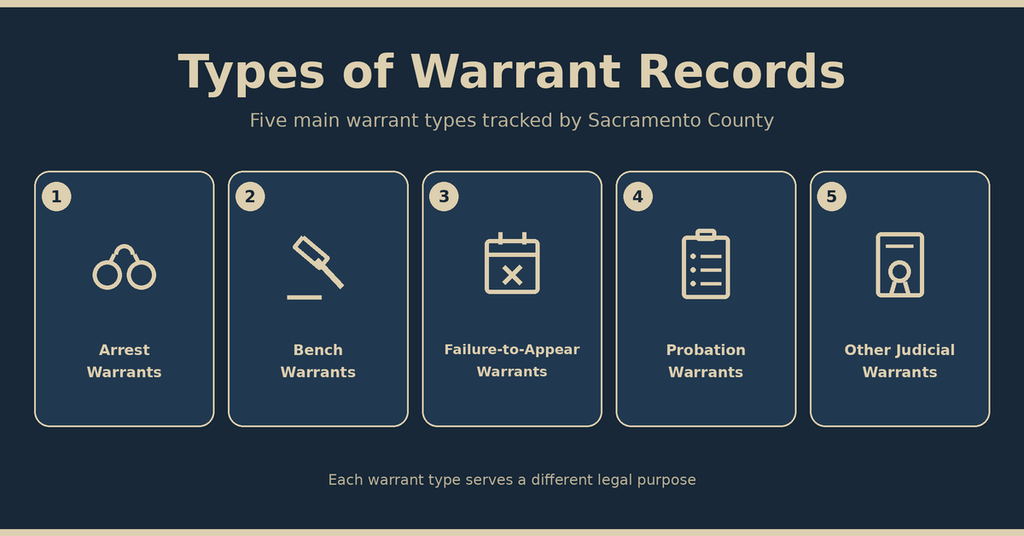
Arrest Warrants
Arrest warrants are issued when police show proof that a person may have committed a crime. A judge reviews the report and signs the order. The warrant tells officers to take the person into custody. Most arrest warrants come with a bond amount set by the judge.
Bench Warrants
Bench warrants are issued directly by a judge from the bench. They happen when a person breaks a court rule, such as missing a hearing. The court orders the person to appear or face arrest. Bench warrants stay active until the person shows up in court or the judge recalls them.
Failure-to-Appear Warrants
Failure-to-appear warrants are a common subset of bench warrants. The court issues them when someone misses a scheduled court date. The warrant forces the person back to court to answer for the missed date. Bond amounts often go up on failure-to-appear warrants.
Probation Warrants
Probation warrants are issued when a person on probation breaks the rules. The judge signs the warrant after a probation officer files a report. The person faces arrest and a hearing on the probation violation. Probation warrants often have no bond set.
Other Judicial Warrants
Other judicial warrants cover search warrants and witness warrants. Search warrants let officers search a home or business for evidence. Witness warrants force a witness to appear in court. These warrants appear on the portal but follow different release rules than arrest warrants.
Warrant Status and Disposition
The status field on a warrant record tells you what is happening right now. The status changes as the case moves through the court system. You should check the status before contacting anyone about the warrant. The list below explains every status you might see.
Active Warrants
Active warrants are still outstanding and waiting to be served. The person has not been arrested, and the court has not canceled the warrant. Officers can arrest the person at any time on an active warrant. The status stays active until the court takes further action.
Served Warrants
Served warrants mean the person was taken into custody. The sheriff or police department marks the warrant served once the arrest happens. The record still appears on the portal for history. Served warrants show the date and agency that made the arrest.
Recalled Warrants
Recalled warrants are canceled by the judge who issued them. The court pulls the warrant back, often after the person shows up or the case is settled. Recalled warrants do not lead to arrest. The status changes to recalled once the court files the order.
Quashed Warrants
Quashed warrants are canceled by a higher court after a legal challenge. The defense lawyer files a motion, including bench warrants, and the judge agrees the warrant should not exist. Quashed warrants are removed from the active list. They still appear in the archive for record-keeping.
Expired Warrants
Expired warrants ran out the time limit set by law. Some warrants have a built-in expiration date. Once the date passes, officers cannot arrest on that warrant. The status shows expired so the court knows the warrant is no longer valid.
Status Changes
Status changes happen as the case moves through the system. The portal updates the status every time the court files a new order. You may see the status change from active to served or recalled within days. Always refresh the page to see the latest status.
Warrant Record Identification
Matching the correct warrant record takes a few steps. The portal shows many warrants with similar names and numbers. You confirm the match by checking each field. The list below walks you through how to verify the record.
Matching the Correct Person
You start by checking the subject name, date of birth, and address. These three fields together confirm the right person. A small spelling change or wrong date means you have the wrong record. Compare the portal data with the facts you already have.
Matching the Warrant Number
The warrant number is the fastest way to confirm a match. Type the number into a separate search and see if the same person comes up. If the name and number match, you have the right record. If they differ, search again with different details.
Identifying the Issuing Authority
The issuing authority tells you which court signed the warrant. Sacramento County warrants come from Superior Court and city courts. Knowing the court helps you know who to call for questions. Each court has its own clerk office for record requests.
Confirming the Jurisdiction
The jurisdiction field shows the county or city that has authority over the warrant. Sacramento County warrants apply only inside county lines. A warrant from another county does not appear on this portal. Check the jurisdiction before you plan any action.
Distinguishing Several Warrants
One person can have several warrants at the same time. The portal lists them by date, with the newest at the top. Click each warrant to read the details. You need to clear every warrant, not just the first one you see.
Warrant Record Availability
Warrant records fall into three time-based groups: current, historical, and archived. Each group has different access rules. Some warrants stay public, and others become restricted. The list below shows what you can find and where.
- Current warrants: public, no login needed
- Historical warrants: public, viewable for years
- Archived warrants: request only, by mail or in person
- Restricted warrants: legal reason required
- Sealed warrants: hidden from the public portal
Current Warrant Records
Current warrant records cover active warrants from the past few years. They appear on the public portal without any login. You see the warrant details and current status. Current records update within hours of any court action.
Historical Warrant Records
Historical warrant records cover served, recalled, or expired warrants. They stay on the portal for public view. You can read the warrant details and see how the case ended. Historical records help with background checks and old case reviews.
Archived Warrant Records
Archived warrant records cover old cases moved to long-term storage. The sheriff keeps these records on paper and digital tapes. You must request archived records by mail or in person. Archive requests take longer to process than online searches.
Public Warrant Records
Public warrant records cover the basic fields on every warrant. The portal lists the name, warrant number, type, court, and status. No login is needed to view public records. Anyone with the right search terms can pull up public warrant data.
Restricted Warrant Records
Restricted warrant records cover cases with sealed court orders. The court blocks the public from seeing certain details. You must show a legal reason to view restricted records. Lawyers and law enforcement can request restricted warrants through the court clerk.
Sealed Warrant Records
Sealed warrant records are hidden from public view by a judge. The court seals warrants in sensitive cases, such as those with juveniles or confidential informants. Sealed warrants do not appear on the public portal. Only court staff and officers can see the records.
Getting Warrant Records
You can get warrant records through five channels. Each channel works for a different need. Online searches cover most public records. Court and law enforcement requests cover sealed or restricted files. The list below explains every way to get a warrant record.
- Online portal: free, instant, public records only
- Court clerk: small fee, full case file access
- Sheriff records desk: phone help, active cases
- Mail request: archived or restricted records
- Copy service: printed copies with court seal
Online Warrant Searches
Online searches work for any public warrant on the portal. You do not need an account for basic searches. You see the warrant details and can print the page. Online searches are free and available any time of day.
Court Record Access
Court record access goes through the Sacramento Superior Court clerk. You visit the clerk office in person or use the court website. Court records show the full case file tied to the warrant. You may need to pay a small fee for copies.
Sheriff Record Access
Sheriff record access goes through the sheriff records desk. You call the desk and ask about a specific warrant. Officers confirm the warrant and tell you the next steps. Sheriff record access works for cases under active investigation.
Records by Request
Records by request work for archived or restricted warrants. You fill out a request form and send it to the records unit. The unit pulls the file and sends you a copy. Requests take 5 to 10 business days to process.
Warrant Record Copies
Warrant record copies come from the sheriff or court clerk. You pay a fee per page and pick up the copies in person. Some offices mail copies for an extra fee. Copies carry an official stamp for use in other legal matters.
Warrant Record Updates
The portal updates warrant records as the courts file new orders. Each update shows a date stamp so you know how fresh the data is. You should check the update date before relying on the record. The list below shows the six types of updates you see.
Newly Issued Warrants
Newly issued warrants appear on the portal within 24 hours of the judge signing them. The status shows active right away. The warrant details include the issue date and bond amount. New warrants sort to the top of search results.
Served Warrant Updates
Served warrant updates happen after the sheriff arrests the person. The arrest team files the served notice with the court. The portal updates the status from active to served. You see the date and agency that made the arrest.
Recalled Warrant Updates
Recalled warrant updates happen after the judge cancels the warrant. The court clerk sends the recall order to the sheriff. The portal updates the status within a few days. Recalled warrants no longer lead to arrest.
Quashed Warrant Updates
Quashed warrant updates happen after a higher court cancels the warrant. The order goes to the sheriff and the lower court. The portal updates the status within a week. Quashed warrants move to the historical list.
Corrected Warrant Entries
Corrected entries happen when the court fixes a typo or wrong detail. The sheriff updates the portal with the right name, date, or charge. You see a correction note on the record page. Corrected entries keep the same warrant number.
Removed or Archived Entries
Removed or archived entries happen when the warrant moves to long-term storage. The portal removes the entry from public view. The archive keeps a copy for legal and record-keeping reasons. You can still request archived records by mail.
Warrant Record Accuracy
Warrant records must be accurate to protect everyone’s rights. The court and sheriff check the data before posting it. You can also help by reporting wrong details. The list below shows how to verify and report warrant data.
Verifying Warrant Details
You verify the details by comparing the portal record with court papers. Check the name, date of birth, and warrant number. If the portal shows different data, call the court clerk. Court papers are the official source for warrant facts.
Checking Current Status
You check the status by looking at the status field on the record page. The status shows the most recent court action. Residents seeking booking releases can access these resources online. Refresh the page to see updates from the past hour. Active warrants show active, and old ones show served or recalled.
Confirming Record Currency
You confirm the record date by reading the update stamp at the bottom of the page. The stamp shows the last time the sheriff changed the record. Records updated today are current. Records older than 30 days may need a fresh search.
Identifying Duplicate Entries
You identify duplicate entries by comparing the warrant numbers and dates. Two records with the same name and date point to one person. The duplicates may have slightly different spellings. Report duplicates to the sheriff records unit.
Reporting Wrong Details
You report wrong details by calling the sheriff records desk during business hours. Give the warrant number and the wrong field. The sheriff checks the court file and fixes the record. Reports take 3 to 5 business days to process.
Warrant Search Problems
Warrant searches sometimes hit roadblocks. The portal may show no results when a warrant exists. Or the record may show old data. The list below covers the seven problems you might face and how to fix each one.
- Wrong spelling brings up no records
- Common name needs extra filters
- Warrant not yet posted to the portal
- Status not refreshed after court action
- Recalled warrant still listed for weeks
- Out-of-county warrant on wrong portal
No Warrant Found
A “no warrant found” result can happen with a misspelled name. Try different spellings and add the date of birth. The warrant may also be in another county. Check nearby counties if you know the person lives close by.
Similar Names
Similar names bring up results for the wrong person. Add a middle name, date of birth, or address to narrow the list. The portal sorts by best match first. Read each result to confirm you have the right record.
Incorrect Warrant Number
An incorrect warrant number brings up an error or wrong record. Check the court papers for the exact number, with no dashes. Type the number slowly to avoid typos. Contact the court clerk if you cannot find the right number.
Recently Issued Warrant Not Listed
A new warrant may not appear on the portal right away. The sheriff takes up to 24 hours to add new warrants to the system. Wait a day and refresh the search. The warrant will show up once the system updates.
Status Not Yet Updated
An old status can show because the court has not filed the new one yet. The portal updates within hours of the court order. Check the update stamp to see the last refresh. Try the search again the next day.
Recalled Warrant Still Appearing
A recalled warrant may still show on the portal. The system keeps recalled warrants on the public list for a few weeks. The status field will show recalled. The warrant is no longer active for arrest.
Warrant From Another Jurisdiction
A warrant from another county will not show on this portal. You must search the county where the warrant was issued. Each California county runs its own warrant system. Use the California court portal for statewide searches.
Contact Details
You can contact the Sacramento County Sheriff’s Office records unit during business hours. Use the phone number below for warrant questions and record requests. Visit the office in person for archive requests and certified copies. The records desk handles all public warrant questions.
- Location: 4510 Orange Grove Avenue, Sacramento, CA 95841
- Contact Number: (916) 874-5383
- Office Hours: Mon-Fri: 8:00 AM – 4:00 PM
Frequently Asked Questions
Below are quick answers for common questions about accessing Sacramento County warrant records, fees, locations, and document requests.
How can I search warrant records online?
Visit the official website at https://www.sacsheriff.com/pages/records_warrants_faqs.php. The portal lets you enter a name or case number to check active and historic warrants. Results show the type of warrant, issuing court, and current status. The search works for arrest, bench, and probation violation warrants. Data updates daily, so you see the most recent information. No fee is required for a basic lookup.
What is the warrant records login website?
The warrant records login page is part of the Sacramento Sheriff’s online portal. Access it through the same link used for public searches. After clicking the login button, you can enter a username and password supplied by the office if you have a paid account or need to view detailed case files. Free users can still perform a basic search without signing in.
Where is the warrant records office located?
The office sits at 4510 Orange Grove Avenue in Sacramento, California, zip code 95841. It operates Monday through Friday, from 8:00 AM to 4:00 PM, excluding holidays. You can stop by for in‑person assistance, request printed copies, or ask about fees. The staff can also guide you through online services if you prefer digital access.
How much does a warrant records search cost?
Basic online searches are free for the public. If you need certified copies, detailed background checks, or official documentation, fees apply. Typical charges range from $10 for a simple PDF download to $30 for a certified record. Exact amounts depend on the record type and whether a subpoena is involved. Payment can be made online or at the office during business hours.
How do I request a PDF of a warrant record?
After locating the warrant in the online portal, select the “Download PDF” button next to the record. If the option is not visible, you may need a paid account or must submit a documentation request in person. Bring a valid ID and the case number to the office, or email the request using the contact form on the website. Once approved, the PDF is emailed or printed for you.